
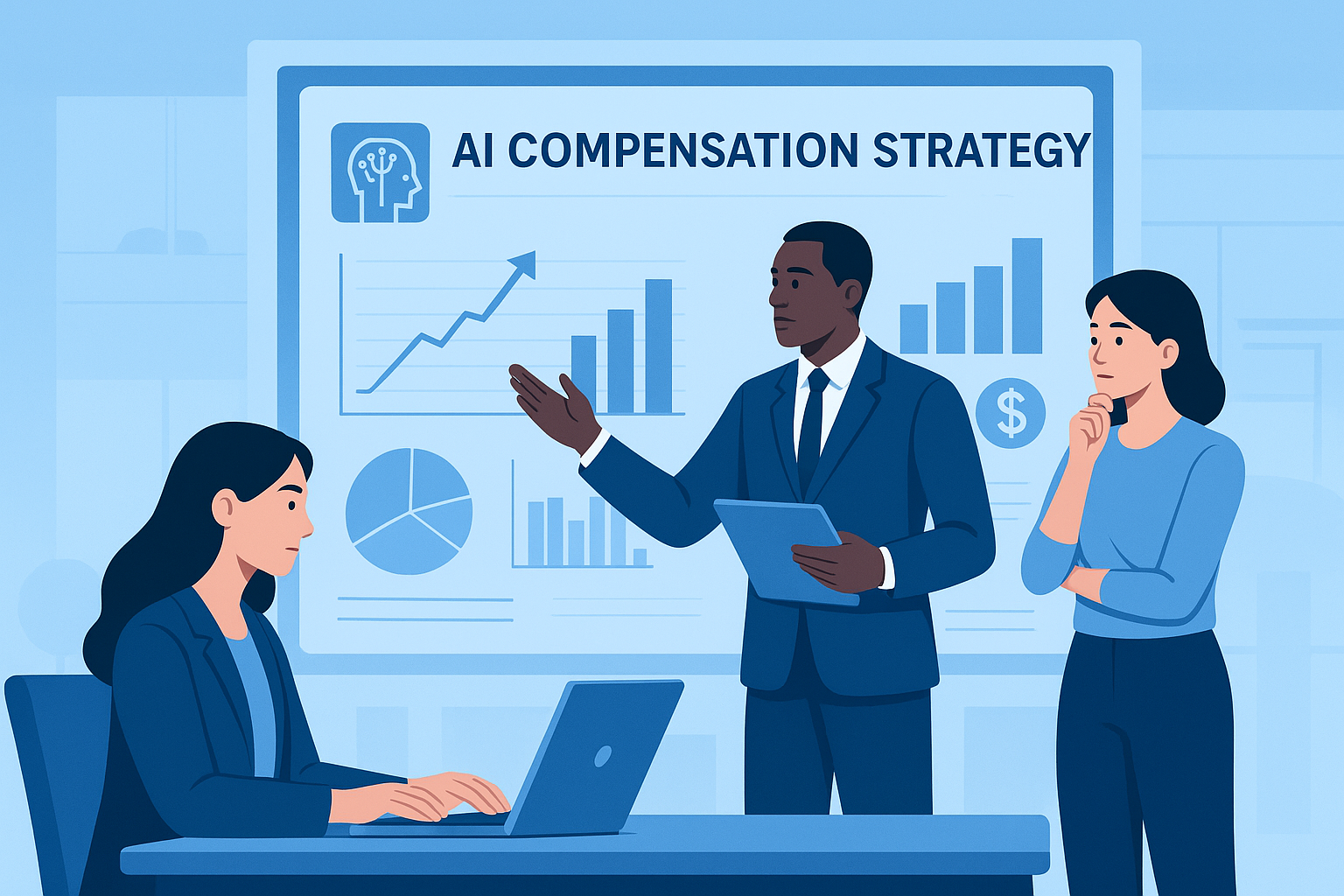
Artificial Intelligence is reshaping nearly every aspect of HR, and compensation management is no exception. Companies worldwide are leveraging AI to ensure fair pay, improve transparency, and benchmark salaries more accurately than ever before. In an era where employee expectations are shifting and pay equity is a regulatory priority, adopting an AI compensation strategy is becoming not just an advantage but a necessity.
The Rise of AI in Compensation
Traditional compensation methods often relied on outdated market surveys and manual benchmarking processes. AI-driven tools now analyze vast amounts of real-time data from job postings, industry trends, and employee performance metrics. This allows organizations to create competitive salary structures that adapt quickly to market fluctuations. With AI, HR leaders gain deeper insights into pay discrepancies, ensuring fairness and consistency across the workforce.
Ensuring Pay Transparency
Employees today demand greater clarity about how salaries are determined. An AI compensation strategy supports this by providing data-backed explanations for pay decisions. This transparency not only strengthens trust between employers and employees but also helps organizations comply with evolving pay equity laws. By integrating AI into compensation systems, companies can demonstrate accountability and reduce risks of bias or discrimination.
Benchmarking with AI Tools
Modern AI-based compensation platforms enable HR teams to benchmark salaries against global datasets instantly. This ensures organizations remain competitive in attracting and retaining top talent. With features such as predictive analytics, these platforms can forecast compensation trends, helping HR departments plan budgets more effectively. Ultimately, an AI compensation strategy allows businesses to stay ahead in a competitive labor market.
Conclusion
As AI continues to evolve, its role in shaping compensation frameworks will only expand. Forward-thinking HR leaders adopting an AI compensation strategy can achieve fair pay, strengthen transparency, and ensure long-term organizational success. In the future, organizations that fail to embrace AI-powered compensation management may struggle to meet both employee expectations and compliance demands.
Read more about Compensation Management.

